Home › Guides › Blood pressure log
Blood Pressure Log: How to Measure and Record Correctly
Updated: October 13, 2026 · by PrettyLights Software, the team behind Nurelio
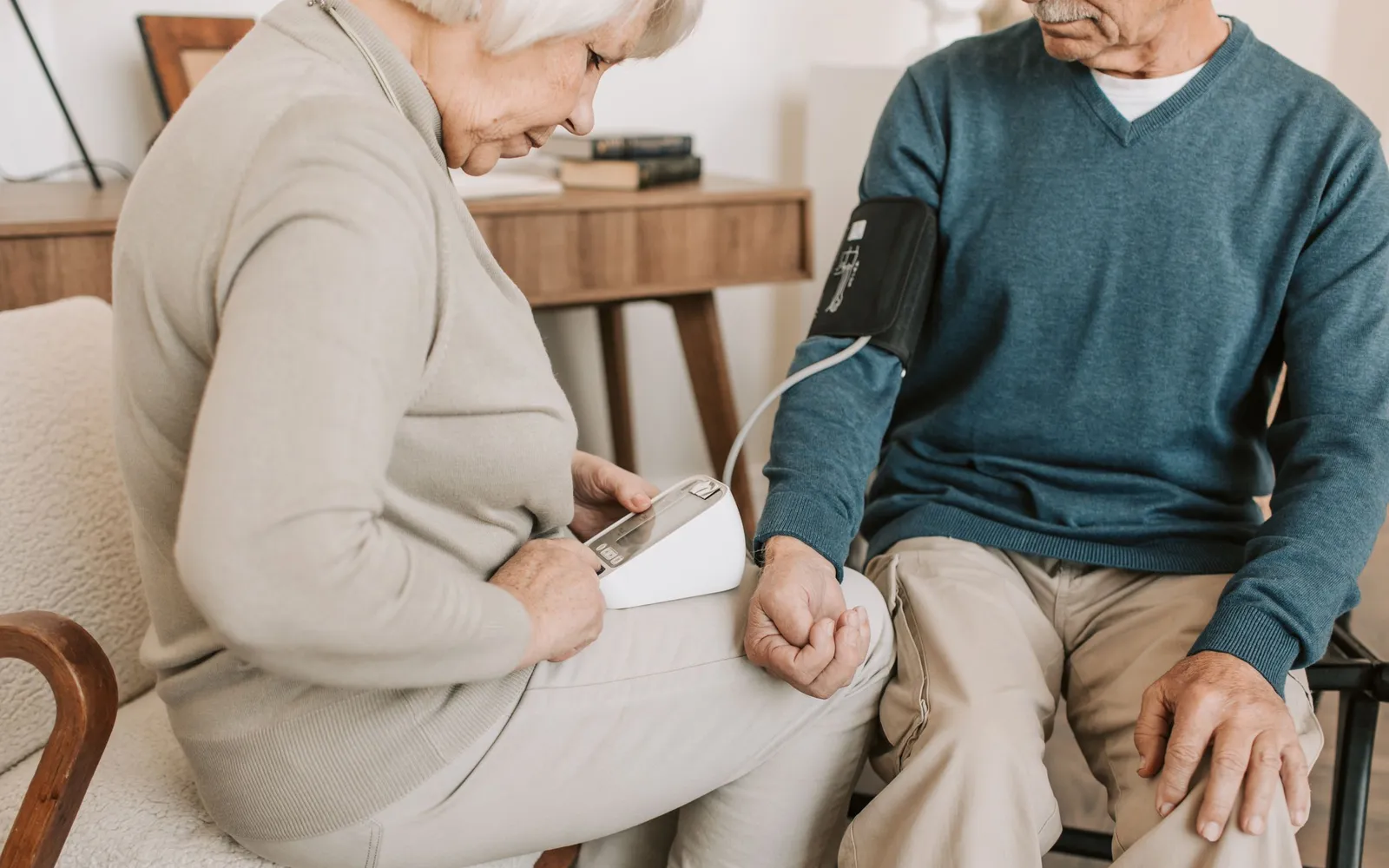
A single blood pressure reading tells you little — only many measurements under comparable conditions show how your blood pressure really behaves in everyday life. That's exactly what a blood pressure log is for: you measure at home at fixed times and write down the readings, so your doctor can see how well a treatment is working or whether something is changing. The German Hypertension League (Deutsche Hochdruckliga) recommends a clear routine for this: measure twice a day, morning and evening, after five minutes of rest, with the cuff at heart level, and each time take two readings at least one minute apart. Before a doctor's appointment, the readings are recorded for seven days. If you take blood pressure medication, measure before your pill. This guide explains the five steps in detail, shows what belongs in the log besides the numbers, and where to find a free template — on paper or in an app that reminds you to measure.
Why keep a blood pressure log?
Blood pressure fluctuates throughout the day — with physical activity, coffee, stress, sleep or the time of day. A reading at the doctor's office is a snapshot, and some people are more tense there than in everyday life. Regular measurements at home complete the picture: they show what your blood pressure looks like in the morning and evening over several days. For them to be meaningful, the monitor matters less than keeping the conditions the same — same times, same posture, same arm. That's exactly what a log captures.
Measuring correctly: the Hypertension League's 5 steps
- Twice a day, morning and evening. In the morning means: before the day gets going; in the evening: once the day is done. If you take blood pressure medication, measure before taking your pill.
- Settle down before measuring. Sit relaxed for about five minutes — without making phone calls, typing messages or watching TV. Avoid physical or emotional strain for about 30 minutes beforehand.
- Cuff at heart level. Sit leaning back in a chair, both feet on the floor, with the cuff about two to three centimeters (roughly an inch) above the crease of the elbow. With upper-arm monitors, heart level comes almost naturally; with wrist monitors, you have to bend your arm to get there.
- Two readings at least one minute apart. Write down both readings — not just the nicer one.
- Record your readings. For seven days, two readings each morning and evening, and discuss them with your doctor.
For the very first measurement, the Hypertension League recommends measuring on both arms. After that, one week of measurements per month is enough for ongoing monitoring — unless your doctor tells you otherwise.
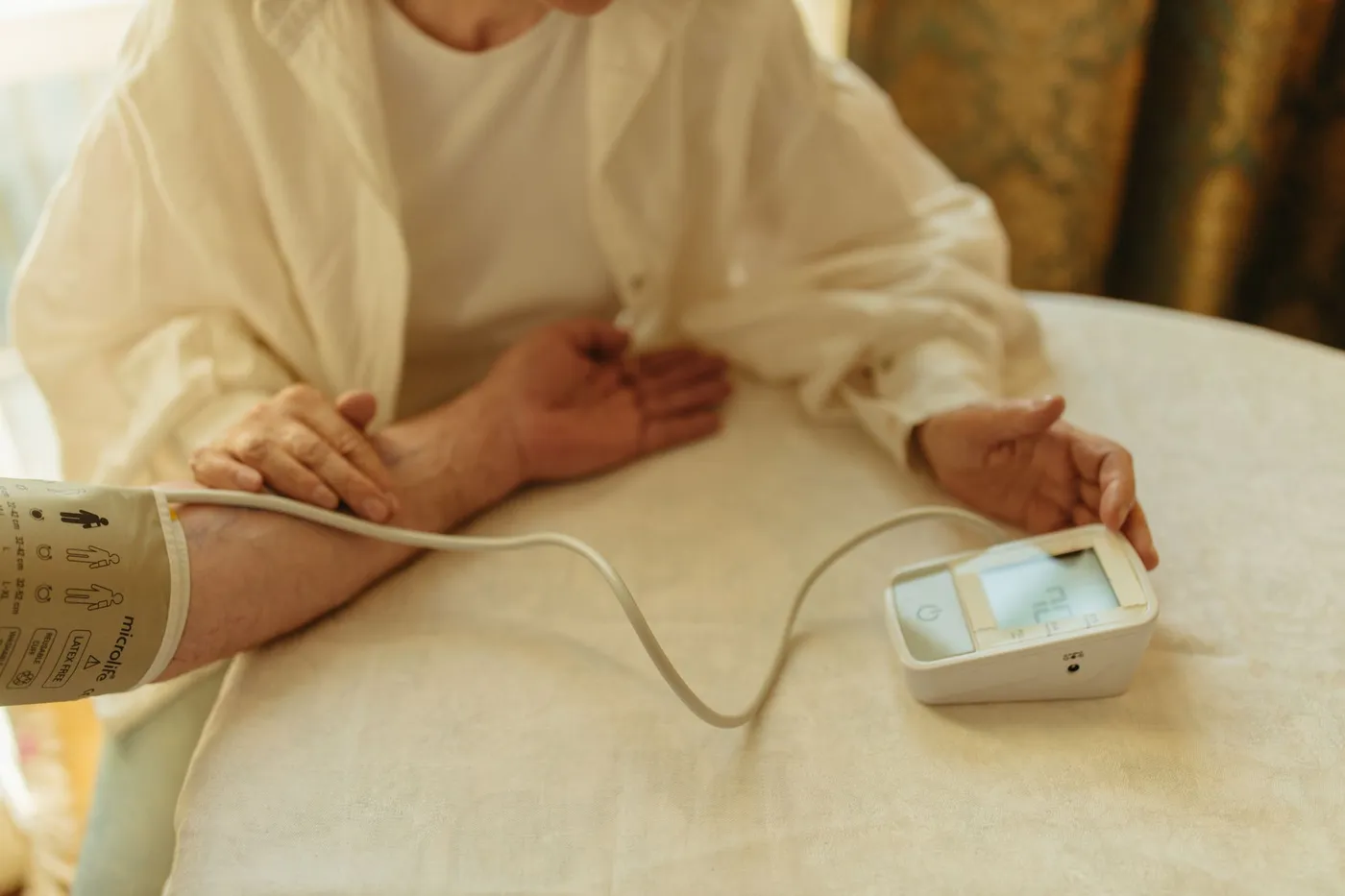
What belongs in a blood pressure log?
- Date and time of every measurement.
- Top and bottom number (systolic and diastolic) — from both readings.
- Your pulse, which most monitors measure at the same time.
- Anything unusual: new or changed medication, a missed pill, symptoms such as dizziness or headaches, a bad night, unusual stress.
The notes in particular are valuable: an unusual reading is much easier to interpret when it says right next to it that the pill was forgotten the day before or that an argument came before the measurement.
What readings are normal?
For measurements at the doctor's office, the German Federal Ministry of Health says: normal blood pressure in adults is below 140 over 90; a top number above 140 or a bottom number above 90 is considered high blood pressure. Which values apply to your measurements at home, and which targets make sense for you personally, is for your doctor to decide. A single high reading is not a diagnosis — what matters is the trend over several days. According to the German Federal Ministry of Health, very high readings can cause symptoms such as dizziness or vision problems. If you feel clearly unwell while measuring, don't wait for your next appointment: get medical advice — and if you have chest pain, shortness of breath or sudden paralysis, call emergency services right away: 112 in Europe, 911 in the US.
Paper or app?
Both work. The German Hypertension League provides a free blood pressure log as a PDF (in German) that you can print out. The advantage of paper: it's there right away and needs no technology. The advantage of an app: it reminds you to measure, shows the trend at a glance and turns your readings into a clear document for your doctor's appointment — without you having to copy down numbers.
How does Nurelio help?
In Nurelio, you enter each measurement with date and time — top and bottom number, your pulse if you like, and a short note such as “after getting up”. A measurement reminder goes off at the times you set, for example morning and evening, daily or only on weekdays. The monthly overview shows on which days you measured and on which you didn't, and the trend makes changes visible. For your appointment, Nurelio creates a doctor report as a PDF with your medications and blood pressure readings — locally on your device. And if family members should keep an eye on your blood pressure too, you can share the readings with them selectively — end-to-end encrypted. How to get a reliable reminder for the pill beforehand is covered in the guide Medication Reminders That Actually Get Through.
Watch it step by step
Sources
- German Hypertension League (Deutsche Hochdruckliga e. V. DHL®): Blutdruckmessung (in German)
- German Hypertension League (Deutsche Hochdruckliga e. V. DHL®): Richtig Blutdruck messen in 5 Schritten (PDF, in German)
- German Federal Ministry of Health (gesund.bund.de): Bluthochdruck: Ursachen und Behandlung (in German, as of March 5, 2026)
This guide is for general information only and does not replace medical advice, diagnosis or treatment.
Try Nurelio
Blood pressure, reminders and a doctor report — the basic version is free forever, with no ads and no account required. Nurelio is available for iOS and Android.
Download on the App Store Get it on Google Play
Learn more: Features · all guides